




Owner’s guide to raising a kitten
Author: Reveal Pet Food
Date: August 31, 2026

Congratulations on your new furry bundle of joy! Taking care and raising a kitten can be a daunting experience, especially if it’s your first time. There are 5 key things that will get you off on the right foot: schedule a vet visit within 48–72 hours of bringing your kitten home, create a safe environment with cozy hiding spots, provide proper nutrition with age-appropriate food, stock up on essential supplies, and begin gentle socialization early. There are many things that you should consider when you purchase a kitten and bring them home. This helpful guide covers how to successfully raise a kitten.
Find a good vet
Schedule your kitten’s first vet visit within 48–72 hours of bringing them home. Following this initial checkup, your kitten will need vaccinations at 6–8 weeks, 10–12 weeks, and 14–16 weeks of age, as recommended by the American Veterinary Medical Association (AVMA). These injections are important, since they will work to protect your kitten against any nasty infections and viruses.
The physical contact that your kitten will receive from the vet can also be important. The extra handling from the vet can make your kitten more comfortable with being touched, which will be helpful throughout your cat’s life.
Additionally, your vet can advise on many other aspects of your kitten’s health, such as worming, flea treatment, and neutering. Neutering is typically performed between 4–6 months of age and is often something that many new cat owners invest in to prevent overpopulation and any further reproductive health problems.
Create a safe space for your kitten
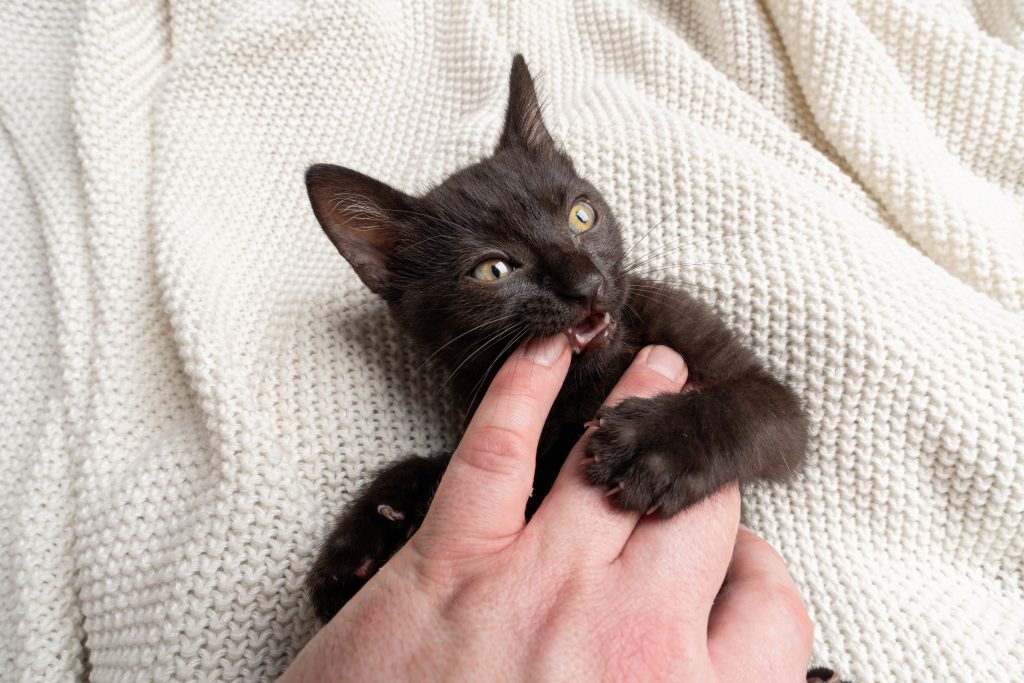
It is relatively common for kittens to hide when they arrive in their new home. Often they feel very overwhelmed and surprised by their new surroundings. Before bringing your kitten home, it’s worth ensuring that there are plenty of cozy hiding places for your kitten to discover.
This will allow your kitten a chance to explore their surroundings, as well as give them time to adjust and feel comfortable in their new home. If you’re struggling with inspiration for safe spaces for your kitten, try placing cardboard boxes with doors cut out or paper bags in the corner of the room – most kittens will sneak inside to feel secure.
One important tip is to resist excessive cuddling when they first arrive home. You want to give your kitten time to settle in and feel comfortable in their new home. Try not to overcrowd them. You want your kitten to venture over to you for attention. This tact will also prove useful for when your cat is older. By raising your kitten this way, you should have an open and friendly cat.
Kitten supplies for new owners – everything you need right here
Just as you would prepare for a newborn baby, every new cat owner/parent should make sure that they stock up on all of the necessary kitten supplies! You want to ensure that your kitten thrives in their new home, so here is an essential list of the most important items that you will need for your new feline friend.
- Litter tray – Choose a low-sided box that kittens can easily enter and exit, along with litter and a scoop.
- Food & water bowls – Select shallow, sturdy bowls that won’t tip over easily.
- A cat carrier – An essential purchase for those important trips to the vet.
- Scratching post – Provides an appropriate outlet for natural scratching behavior and protects your furniture.
- Kitten toys – Stimulate mental development and encourage healthy exercise.
- A kitten bed – Offers a warm, secure place for your kitten to rest.
- Grooming brushes – Help maintain coat health and reduce shedding.
- Collar with an ID tag – Important to include your number in case your kitten goes on an adventure and gets lost.
- Kitten treats – Useful for training and bonding with your new pet.
- Feline calming diffusers – Can help reduce stress during the adjustment period.
If you want to make your new addition feel comfortable and settled in their new home, it’s worth investing in as many of the above products as possible, since they will most likely encourage your kitten to feel at home.
Establish a healthy diet for your feline friend
Proper nutrition is essential for your kitten’s growth and development. Kittens should eat 3–4 small meals per day until 6 months old, then transition to 2 meals daily. According to ASPCA guidelines, kittens require food specifically formulated for their life stage, as it contains the higher protein and calorie content they need for healthy development.
When looking for kitten food, consider options with limited ingredients. Limited ingredient cat food means you can virtually count the ingredients on one hand, providing reassurance that your cat is eating only natural kitten food.
Look for food that is ethically sourced and made with quality proteins like chicken breast and tuna fillets. Transparency in ingredients helps you know exactly what your kitten is eating.
Key Takeaways
- Schedule a vet visit promptly – Book your kitten’s first vet visit within 48–72 hours and follow the vaccination schedule at 6–8, 10–12, and 14–16 weeks.
- Create a safe environment – Provide cozy hiding spots and give your kitten time to adjust before excessive handling.
- Stock up on essential supplies – Prioritize a litter tray, food and water bowls, carrier, scratching post, and toys.
- Feed age-appropriate meals – Offer 3–4 small meals daily until 6 months, then transition to 2 meals per day.
- Socialize gently – Let your kitten come to you for attention to build confidence and friendliness.
Frequently Asked Questions
When should I take my kitten to the vet for the first time? Schedule your kitten’s first vet visit within 48–72 hours of bringing them home to ensure they’re healthy and to establish a vaccination schedule.
What supplies do I need for a new kitten? Essential supplies include a litter tray, food and water bowls, a cat carrier, scratching post, kitten toys, a bed, grooming brushes, and a collar with an ID tag.
How often should I feed my kitten? Kittens should eat 3–4 small meals per day until they are 6 months old, then transition to 2 meals daily.
When should my kitten be vaccinated? Kittens typically receive vaccinations at 6–8 weeks, 10–12 weeks, and 14–16 weeks of age, as recommended by the AVMA.
When should I have my kitten neutered? Most veterinarians recommend neutering kittens between 4–6 months of age to prevent overpopulation and reproductive health issues.